Bitcoin Mining in India: Feasibility and Outlook for 2026
Can the world's most populous nation become a mining powerhouse? We look at the energy, taxes, and hardware realities for the Indian miner.
10 February 2026 • 4 min read
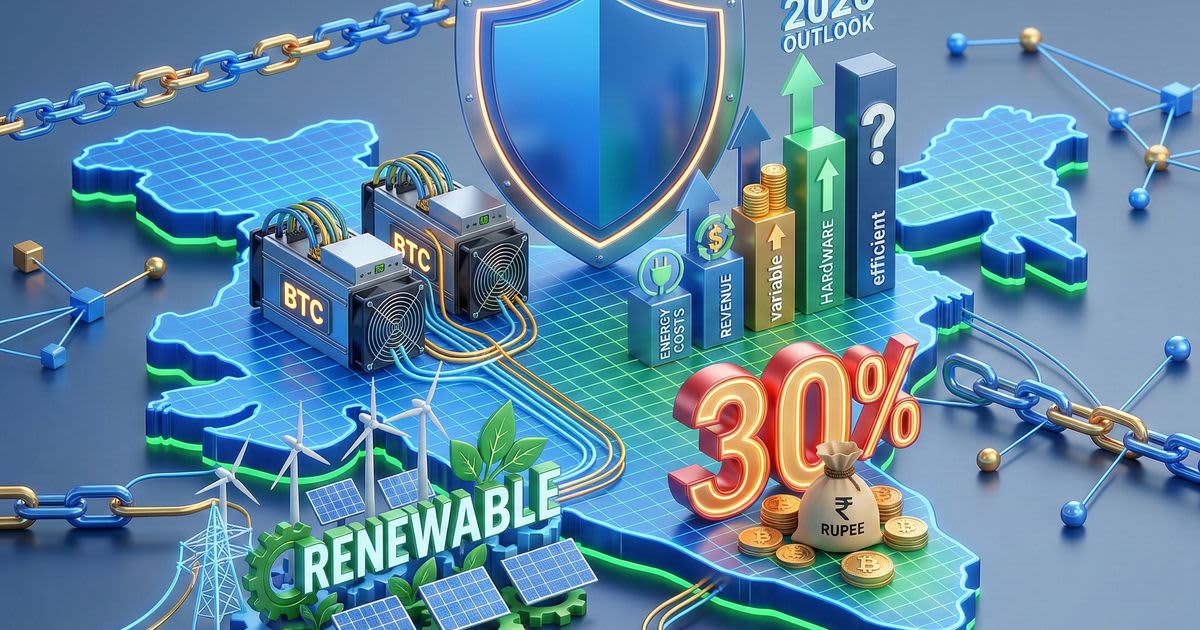
India has always had a complicated relationship with Bitcoin. On one hand, the country boasts one of the highest numbers of crypto users in the world. On the other, regulators have maintained a "wait and watch" approach while implementing some of the world's most aggressive tax policies. For those looking to move beyond just buying and holding, the question of mining often comes up. Is it possible? Yes. Is it profitable? That is where the math gets tricky.
The Regulatory and Tax Landscape
Mining is entirely legal in India, but it is far from easy. The Indian government treats rewards from mining as Virtual Digital Assets (VDA) income. Under the current framework, any "transfer" or sale of these mined rewards is taxed at a flat 30%.
Perhaps the biggest hurdle for Indian miners is the lack of expense deductions. Unlike a traditional business, you cannot currently deduct your massive electricity bills or your high-end hardware depreciation from your mining income. This makes the "net" profit significantly lower than in other jurisdictions. To navigate these complexities, many local miners rely on resources like The 2026 Indian Tax Survival Guide for HODLers to stay compliant while planning their exits.
The Energy Equation: Solar to the Rescue?
Electricity is the single largest operational cost in Bitcoin mining. With residential grid prices in many Indian states ranging from ₹7 to ₹10 per unit, home mining is largely unfeasible. However, India is undergoing a massive renewable energy revolution.
By early 2026, India had added a record 44.5 GW of renewable capacity, with solar energy alone crossing the 132 GW mark. For industrial-scale miners, setting up captive solar plants or "behind-the-meter" solutions has become the only viable path to profitability. Using surplus renewable energy that would otherwise be wasted (curtailed) allows miners to lower their cost per kilowatt-hour to a level that can compete with global farms in the US or Ethiopia.
Hardware and the Psychology of Ownership
To mine effectively in 2026, you need the latest ASIC (Application-Specific Integrated Circuit) hardware. These machines are expensive and must be imported, often incurring significant customs duties.
Yet, for many, the move into mining is about more than just ROI. There is a shift in how one views their wealth when they are the ones producing it. This transition is well-documented in The Psychology of HODLing: Why Physical Hardware Changes Your Relationship with Money, which explores how interacting with physical hardware can actually strengthen your long-term conviction in the asset.
Security: Protecting Your Mined Rewards
Once those hard-earned satoshis hit your wallet, the work isn't over. In a region where regulatory clarity is still evolving, self-custody is the only way to ensure your assets remain truly yours. History has shown us that leaving funds on an exchange is a gamble. As we have seen From Mt. Gox to Now: A Visual History of Why Self-Custody Became Non-Negotiable, the risks of centralization are too high for any serious miner to ignore.
In 2026, security has moved beyond simple 24-word phrases. Professional miners now use their hardware for more than just storage. You can secure your entire digital presence by Setting Up Your Hardware Wallet as a FIDO2 Security Key, ensuring that your exchange accounts and emails are immune to phishing attacks.
Summary and Outlook
Bitcoin mining in India in 2026 is a game of margins and infrastructure. While the 30% tax and high grid costs are significant barriers, the explosion of renewable energy and a growing local ecosystem of hardware support provide a glimmer of hope for industrial-scale operations.
For the individual, home mining remains more of an educational "hobby" than a primary income source. If you choose to mine, remember that your greatest asset is your security. Whether you are HODLing for yourself or Passing Your Bitcoin to the Next Generation, the tools you use to secure your keys are as important as the machines you use to mine them.
Related posts

Beyond the Password: The Ultimate YubiKey 5 Setup Guide for Gmail & Binance
1 January 2026 • 4 min read

State digital ledgers trigger massive capital flight to physical gold and privacy networks
5 May 2026 • 3 min read