From Mt. Gox to Now: A Visual History of Why Self-Custody Became Non-Negotiable
Tracking the Evolution of "Not Your Keys, Not Your Coins"
4 January 2026 • 4 min read
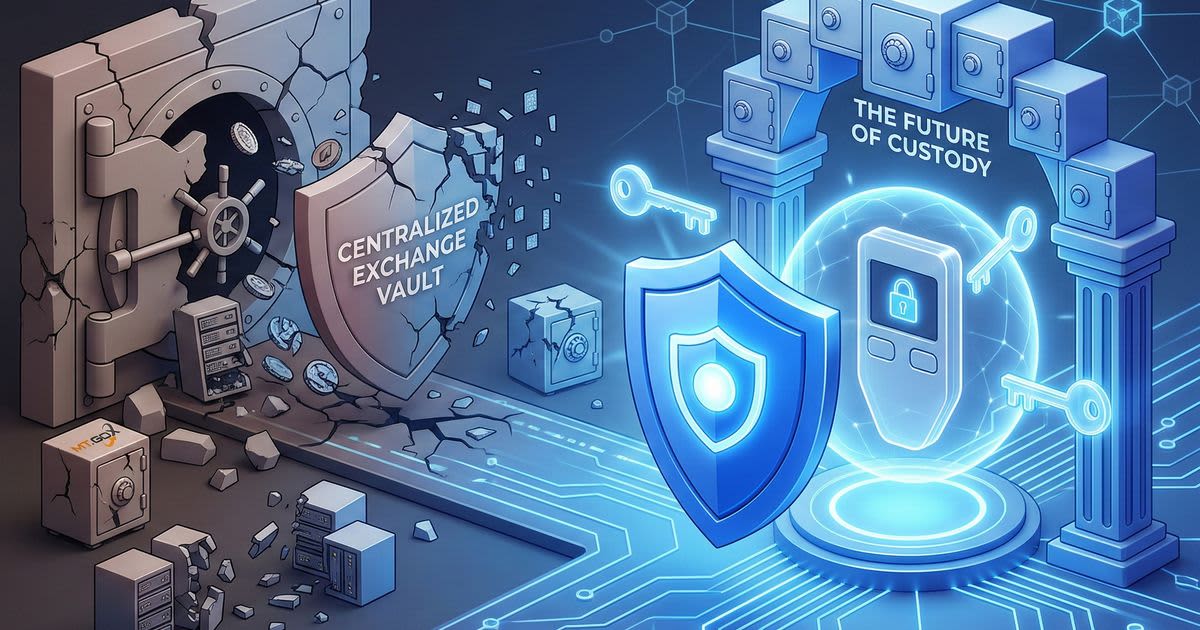
The history of Bitcoin is often told through price charts and bull runs, but the true underlying narrative is one of security and sovereignty. We have moved from an era of experimental digital "play money" to a global financial asset class where the stakes are trillions of dollars. However, as the value of these assets grew, so did the size of the targets on the backs of centralized exchanges.
Understanding the shift toward self-custody requires looking back at the wreckage of the platforms that failed. Each collapse was a catalyst that drove the community toward hardware wallets and the realization that personal security is the only true security.
The Era of Centralized Frailty
The early days of Bitcoin were dominated by a single name: Mt. Gox. At its peak, this Tokyo-based exchange handled over 70% of all Bitcoin transactions globally. When it collapsed in 2014 after losing 850,000 BTC, it wasn't just a financial disaster; it was a psychological trauma for the entire ecosystem. It proved that "bigness" does not equal "safety."
Following Mt. Gox, the industry saw a pattern of failures:
- Bitfinex (2016): A massive hack that led to a "socialized loss" among users.
- QuadrigaCX (2019): The mysterious death of a founder that locked away millions in private keys only he knew.
- FTX (2022): Perhaps the most stinging betrayal, where user funds were misappropriated on a systemic level.
Each of these events reinforced the "Not Your Keys, Not Your Coins" mantra. Investors realized that keeping assets on an exchange is essentially an unsecured loan to that platform.
The Shift to Physical Sovereignty
As these collapses became more frequent, the technology to prevent them matured. Hardware wallets like Ledger and Trezor transitioned from niche gadgets to essential financial tools. The move to physical devices isn't just about security; it changes how we perceive value. In fact, the psychology of HODLing: why physical hardware changes your relationship with money explores how holding a physical object makes you a more disciplined and long-term investor.
Self-custody has also evolved beyond just "storing coins." Today, your hardware device serves as the root of your entire digital presence. You can now go beyond Bitcoin: using your Ledger or Trezor to secure your digital identity and emails, ensuring that your communications are as unhackable as your portfolio.
Why 2026 is the Year of Self-Reliance
The landscape has changed further with the introduction of complex regulations and tax laws. In India, managing your digital assets requires more than just a strong password. If you are navigating the current fiscal environment, the 2026 Indian tax survival guide for HODLers is a critical resource to ensure your self-custodied assets remain compliant while staying under your control.
Furthermore, we are moving toward a future where "losing your keys" is no longer the primary fear. Sophisticated users are now focusing on heritage planning: how to pass your Bitcoin to the next generation, ensuring their sovereign wealth outlives them without ever needing to trust a bank or a centralized custodian.
Summary: The New Standard
The history of crypto is a pendulum swinging between convenience and security. We have learned that:
- Exchanges are for trading, not for storage.
- Centralization creates single points of failure.
- Hardware wallets provide the only verifiable proof of ownership.
Self-custody is no longer a "pro tip" for tech-savvy enthusiasts; it is the non-negotiable standard for anyone who values their financial future. The wreckage of the past decade serves as a clear warning: the only person who can truly protect your wealth is you.
Related posts



The fiat yield illusion and why self-custody is the last remaining arbitrage for the Indian investor
4 March 2026 • 4 min read

Tokenized gold becomes the ultimate liquidity anchor after the Doha oil crash
29 July 2026 • 3 min read